
In the last week of my study trip to Switzerland, I visited the Tinguely Museum in Basel. One reason was the exhibition by Carl Cheng, which interested me, and also the concert “Nachtklang im Museum – Unter Strom“; many thanks to Lukas Nussbaumer for the invite. On my own, I would likely have overlooked the event. Since I do appreciate music as an art form, but unfortunately I do not understand its intricacies, I will refer here to Lukas’s professional article in the Schweizer Musikzeitung.
For my part, I can say that it was a very unique experience: a concert in a museum, in, on and between the huge, bizarre moving installations by Jean Tinguely. What was especially striking was the private atmosphere and the closeness to the artists, even though the occasional involvement of individual people from the audience sometimes made me nervous, because of the language barrier (the concert was mostly German), as I may not have fully understood what was being asked. The concert was an experience I will remember fondly.
Admission Included and First Look at Tinguely
Besides the concert, the museum admission itself was included in the price, which I of course made use of. Since I didn,t have much time, and Tinguely’s works are part of the permanent exhibition, I focused more on Carl Cheng’s works.
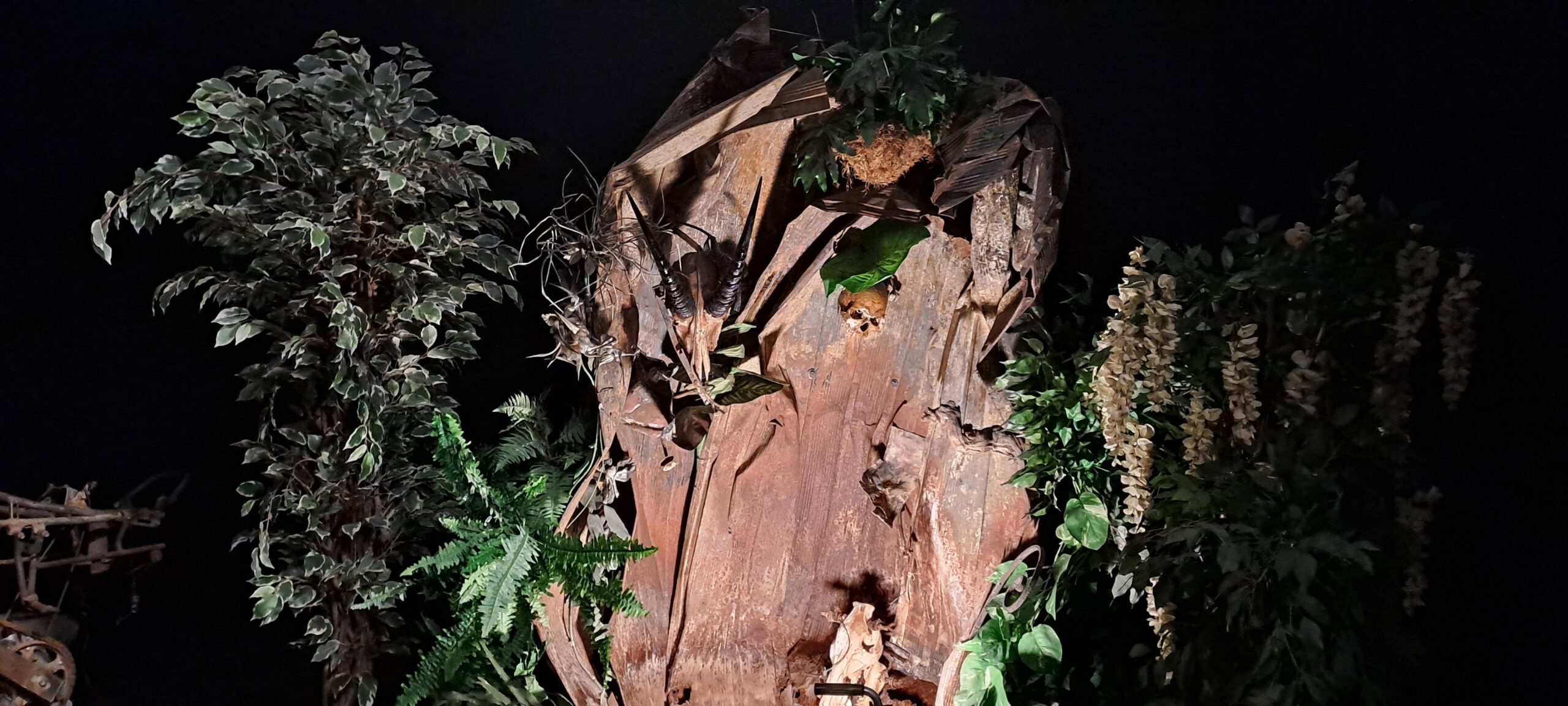
But one work by Tinguely that I particularly enjoyed was “La Fontaine de la Mort II”, because it blends natural elements with an unsettling sense of eeriness. Like most of Tinguely’s installations, it was interactable with a button, setting it into motion.
What makes the Tinguely Museum especially memorable is the chance to interact with so many of its installations. On my next study trip to Basel, I will definitely stop by the Tinguely Museum again and invest more time in his works.
Discovering Carl Cheng
Now to Carl Cheng. i admit that before visiting the exhibition I hadn’t had many points of contact with Cheng’s work. That’s a bit of a shame, as the exhibition really appealed to me. The combination of nature with the man-made world, the retro charm, the interactability and changeability of many works – this was exciting from a spectator and an artistic point of view. I will briefly introduce the works that have stayed with me the most and share some of my thoughts.
Erosion Machines: Time, Change and Resposibility
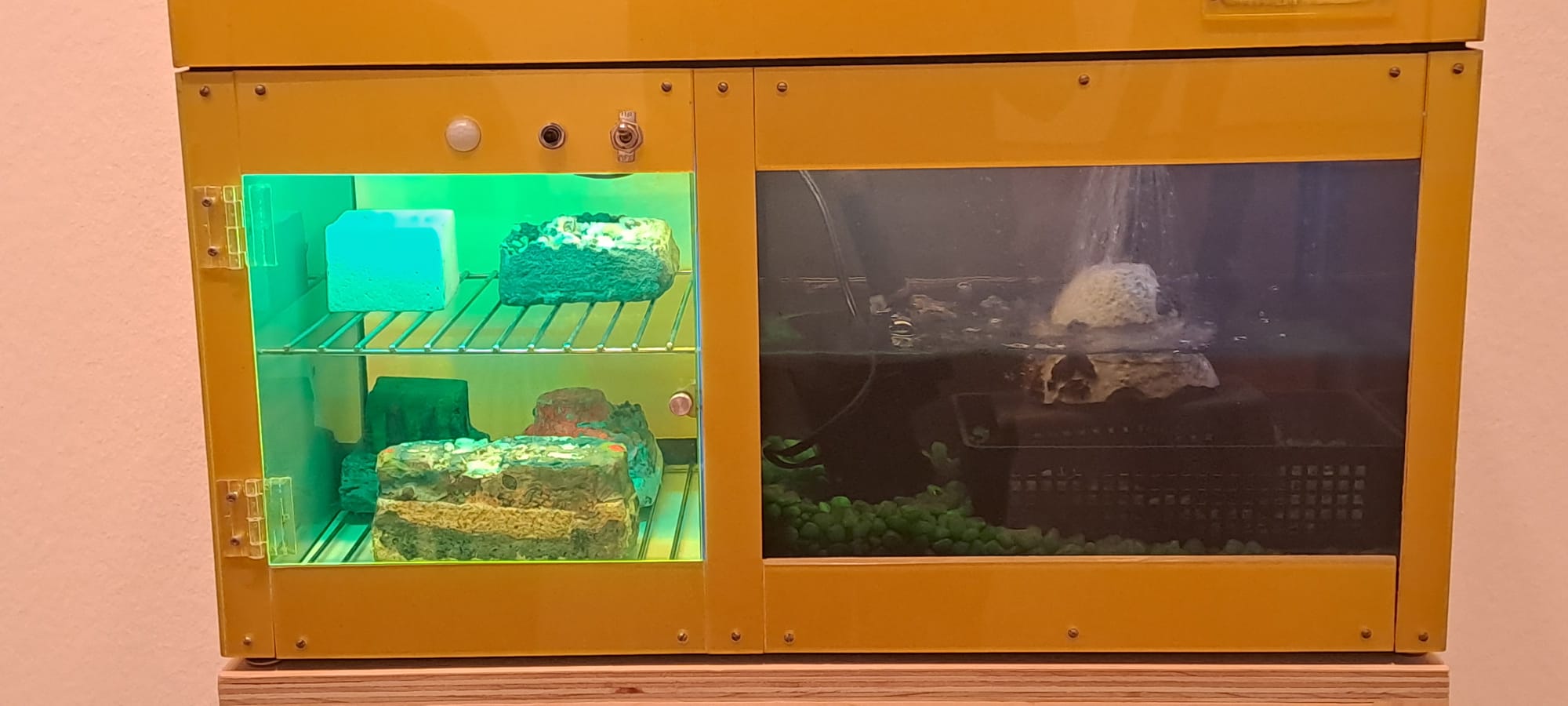
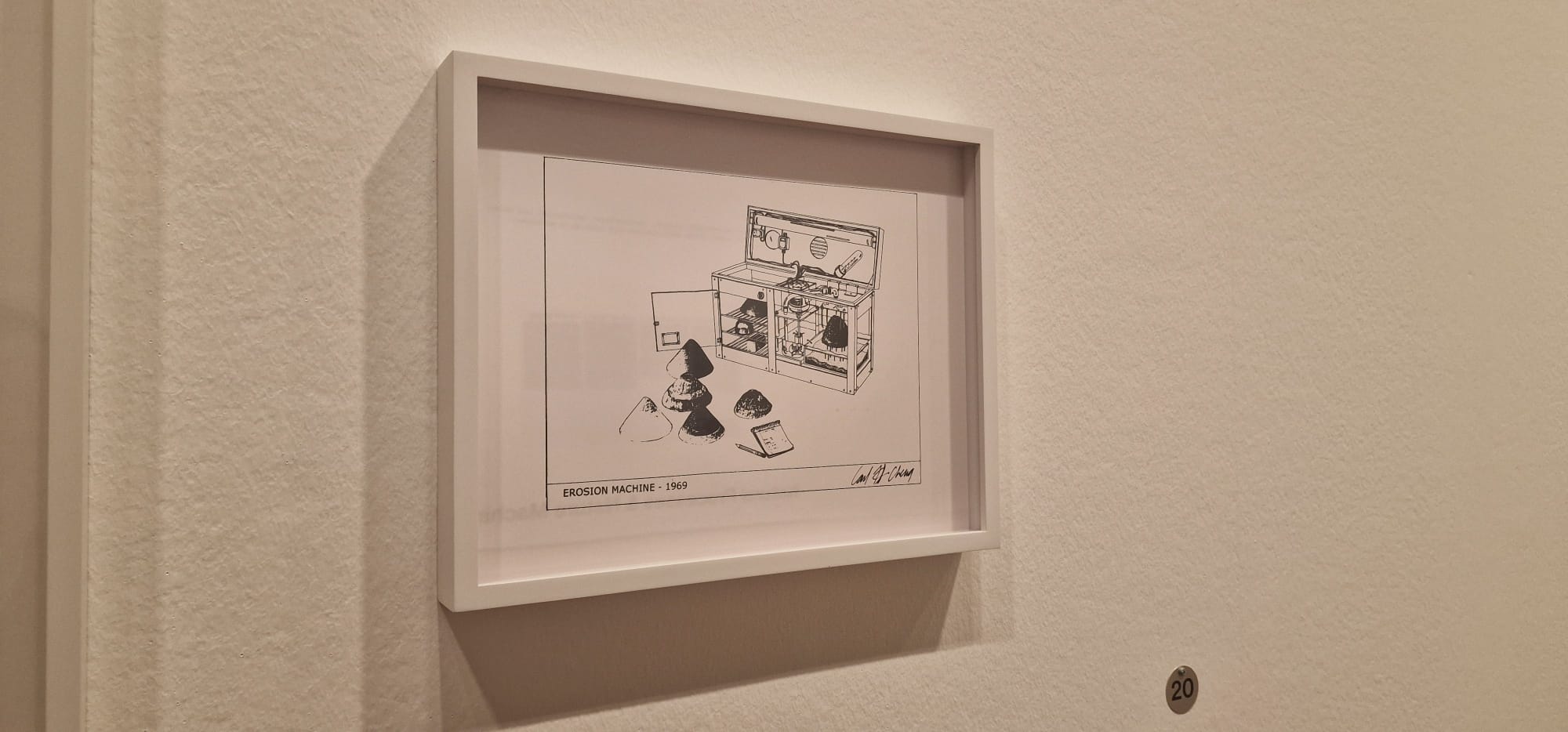
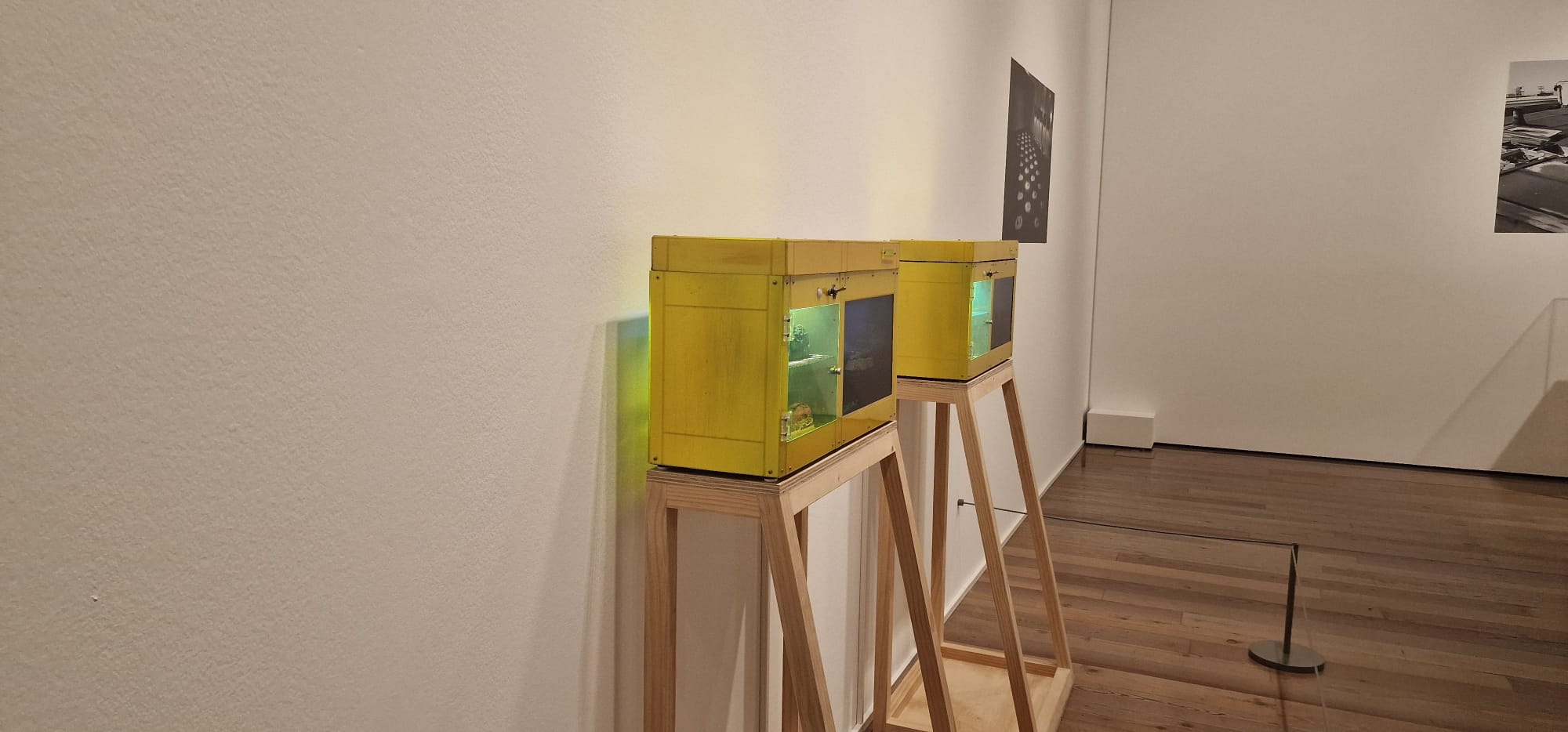
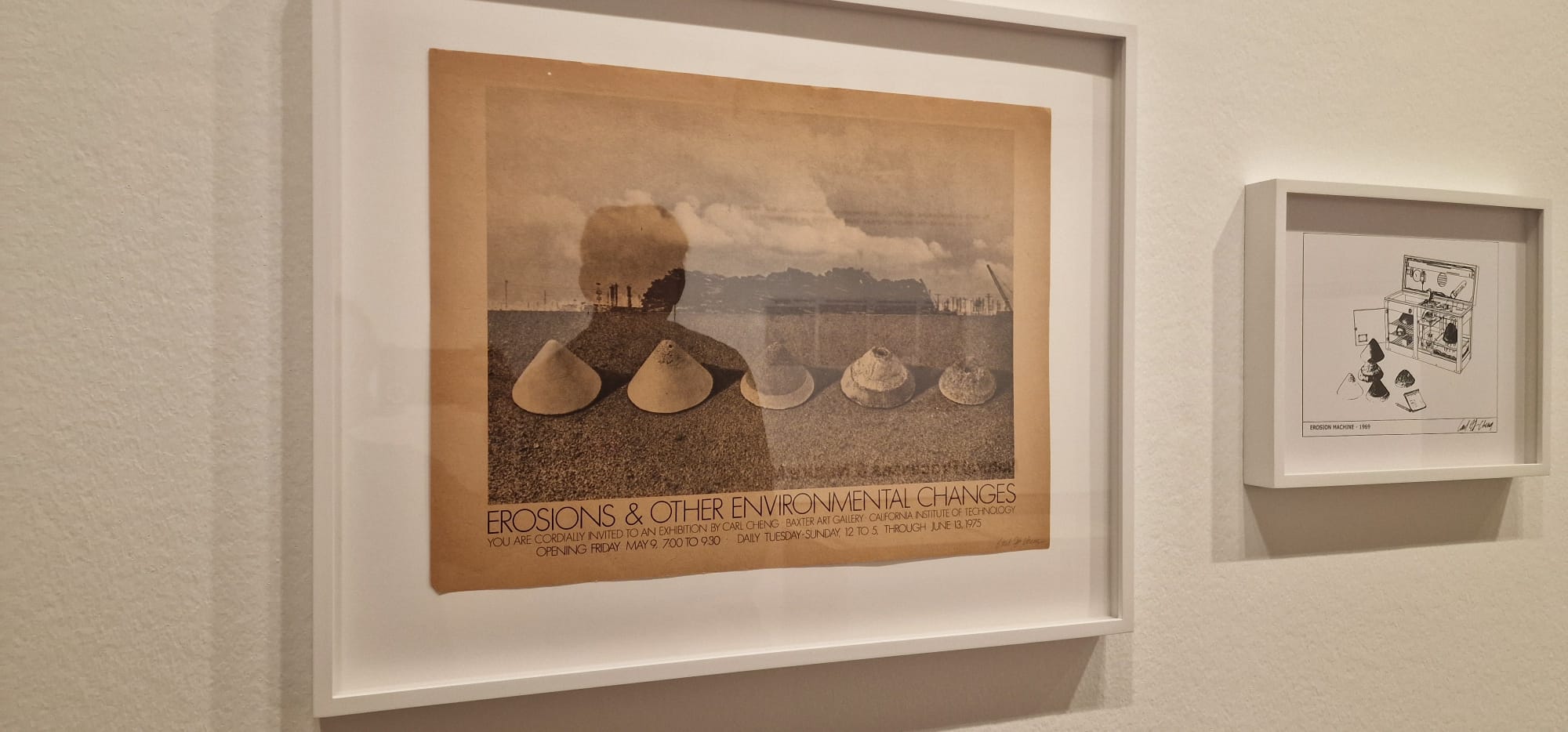
First there are the Erosion Machines. At first glance they are relatively inconspicious, but they reveal a level of dimensionality. Whereas we typicalls see artists creating work in its final form never to change it under any circumstance, these two works function the exact opposite. thorugh a permanent stream of water that hits the mineral, the minerals are gradually changed over time. A visitor that would look at the two works in 50 years will presumably witness something different.
This not only shows us the passage of time, and how short a human life is in comparison. it also serves as a reminder that our actions today influence the planet future generations will inherit. I feel Cheng manages to communicate this and much more without words which I really appreciate as an artist.
Alternative TV 2 and 3: Watching Nature on a Screen
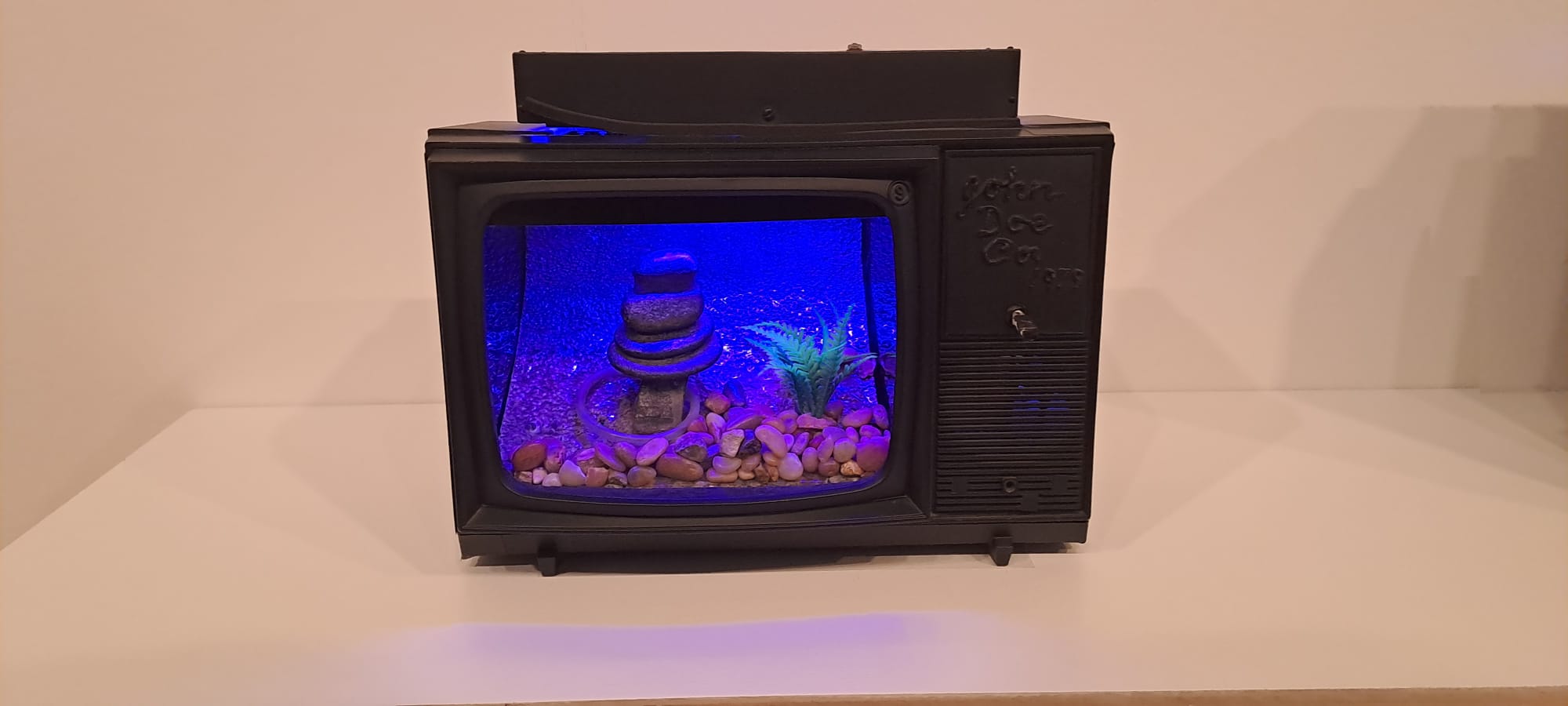
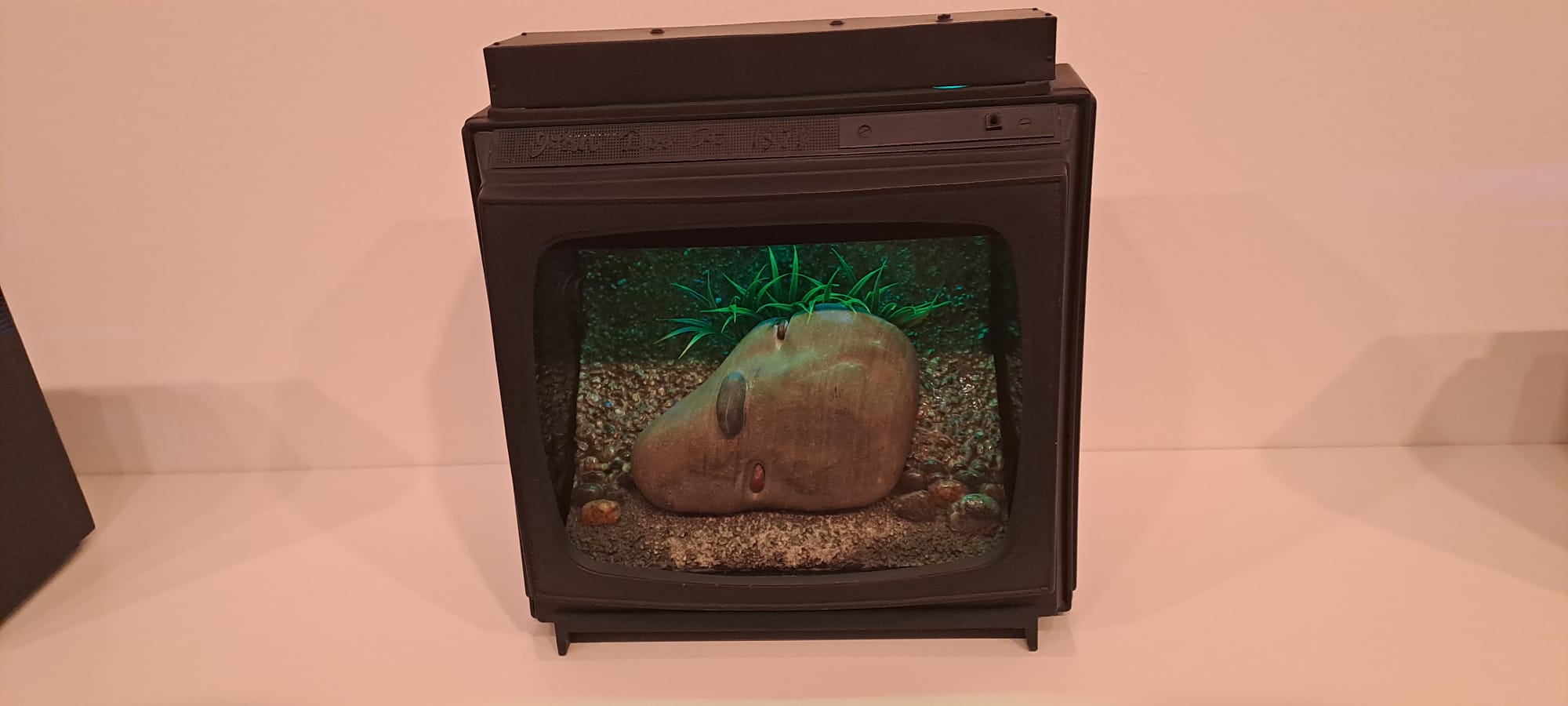
Alongside the Erosion Machines, I also found the two works “Alternative TV 2” and “Alternative TV 3” very diverting. I loved the nostaligic charm of the retro television aesthetic, but even more, I appreciated the message behind it: we spend so much time consuming media (my generation perhaps a little less on traditional TV), that we end up watching nature on a screen instead of stepping outside and experiencing it ourselves.
As someone that mostly lives in and grew up in London, I’m especially attuned to this. In London, you must go looking for nature with purpose, save for the scattered parks and small gardens.
Favorite work: The Organic Visualizer
Lastly, my favourite work by Cheng: “The Organic Visualizer”. At first glance it’s reminiscent of a very bulky old-fashioned CT scanner, until further inspection. Behind the glass pane there is a rotating piston on which a kind of diorama landscape has been mounted, reminiscent of a nighttime satellite image of the Earth.
What I found especially appealing is that by pressing various buttons you can illuminate areas of the cylinder, so that depending on the type of light (such as ultraviolet) different landscapes would appear, which would dramatically shift the tone of the miniaturized landscape. there isn’t any indication telling you which button does what and how it will change the happening behind the glass.
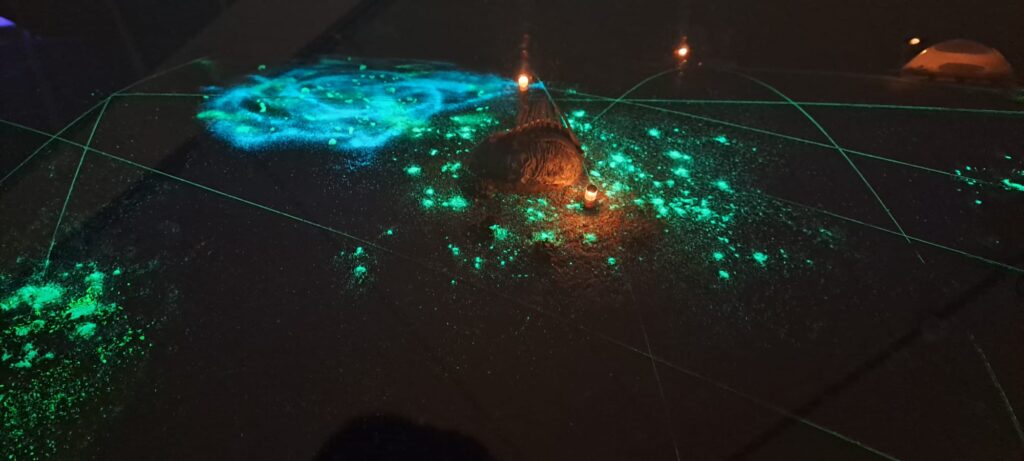
In a way, it mirrors reality. We humans don’t truly know our purpose or our place in the universe, nor why things are the way they are, or what consequences, if any, our existence carries. I would have loved to explore all the exhibitions in greater depth, but I simply didn,t have the time and that, too, feels lika a reminder of human life, which is far too short to take in all the wonders around us in their entirety.
More information about this artwork you also find at Carl Cheng, Organic Visualizer/Assembler, 1970-2016 | Philip Martin Gallery.
Continuing the journey back in London
Fortunately, brochures were also available in English, so that even back in London I will have the pleasure of continuing to explore and discover Carl Cheng’s art. I can highly recommend it.